
General Chair
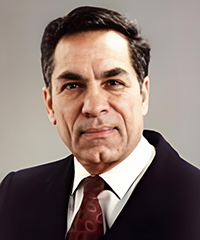
Om Parkash Malik
Professor, IEEE Life Fellow, University of Calgary, Canada.
Research field: Smart Grid and Renewable Energy Systems; Solar Photovoltaic and Concentrated Photovoltaic Systems; Hydrogen Energy Technologies; Energy Conversion and Management; Solar Energy Materials and Optoelectronic Technologies; Energy System Optimization and Techno-Economics.
Professor Om P. Malik has done pioneering work in the development of controllers for application in electric power systems and wind power generation over the past over 50 years. After extensive testing, the adaptive controllers developed by his group are now employed on large generating units. His other interests include digital protection, control of renewable power generation and micro-grids, and AI applications in power system control. He has published over 800 papers including over 430 papers in international Journals and is the coauthor of four books: (1) Electric Distribution Systems, (2) Power System Stability, (3) Power Grids with Renewable Energy, Power System Stability and Cointrol. Professor Malik graduated in 1952 from Delhi Polytechnic. After working for nine years in electric utilities in India, he obtained a master’s degree from Roorkee University in 1962, a Ph.D. from London University and a DIC from the Imperial College, London in 1965. He was teaching and doing research in Canada from 1966 to 1997 and continues to do research as Professor Emeritus at the University of Calgary. Over 100, including 54 Ph.D., students have graduated under his supervision. Professor Malik is a Life Fellow of IEEE, and a Fellow of IET, the Engineering Institute of Canada, Canadian Academy of Engineering, Engineers Canada and World Innovation Foundation. He is a registered Professional Engineer in the Provinces of Alberta and Ontario, Canada, and has received many awards. He was Director, IEEE Region 7 and President, IEEE Canada during 2010-11 and President, Engineering Institute of Canada, 2014-2016.
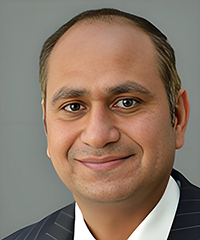
Mohan Lal Kolhe
Professor, IEEE Senior Member, University of Agder, Norway.
Research field: Sustainable Electrical Energy Systems; Smart Grid and Grid Integration of Renewable Energy Systems; Electric Vehicles; Hydrogen Energy Technologies; Solar Photovoltaic and Wind Energy Systems Engineering; Electro-Mechanical-Chemical Energy Conversion and Management; Power System Dynamics, Electrical Machines, Energy Conversion and Management; Techno-Economics of Energy Systems.
Prof. Dr. Mohan Lal Kolhe is a full professor in smart grid and renewable energy at the Faculty of Engineering and Science of the University of Agder (Norway). He is a leading renewable energy technologist with three decades of academic experience at the international level and previously held academic positions at the world's prestigious universities, e.g., University College London (UK / Australia), University of Dundee (UK); University of Jyvaskyla (Finland); Hydrogen Research Institute, QC (Canada); etc. In addition, he was a member of the Government of South Australia’s first Renewable Energy Board (2009-2011) and worked on developing renewable energy policies. Professor Kolhe is an expert evaluator of many prestigious international research councils (e.g., European Commission: Erasmus+ Higher Education – International Capacity Building, Royal Society London (UK), Engineering and Physical Sciences Research Council (EPSRC UK), Cyprus Research Foundation, etc.). In addition, many international organizations have invited him to deliver keynote addresses, expert lectures, workshops, etc. He has also been a member of many academic promotional committees. Professor Kolhe has been successful in obtaining competitive research funding from prestigious research bodies (such as the Norwegian Research Council, EU, EPSRC, BBSRC, NRP, etc.) for his work on sustainable energy systems. His work on energy systems and electrical & electronic engineering has been recognised in the top 2% of scientists worldwide consistently from 2020 to 2023, according to Stanford University matrices based on Elsevier data. His top 10 publications have received an average of more than 200 citations each, making him an acknowledged pioneer in his profession on a global scale.
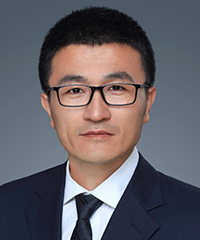
Yufei Ma
Professor, Harbin Institute of Technology, China.
Research field:
Yufei Ma received his PhD degree in physical electronics from Harbin Institute of Technology, China, in 2013. From September 2010 to September 2011, he spent time as a visiting scholar at Rice University, USA. Dr. Yufei Ma is a professor and doctoral supervisor at Harbin Institute of Technology, a Fellow of the Optical Society of America (OSA), and a Highly Cited Researcher in China by Elsevier in 2021, 2022, and 2023. His research interests include optical sensors, trace gas detection, laser spectroscopy, solid-state laser and optoelectronics. He has published more than 200 publications and given more than 40 invited presentations at international conferences. He serves as area editor for Elsevier Photoacoustics and Wiley Microwave and Optical Technology Letters, associate editor for Optica Optics Express, SPIE Optical Engineering and Frontiers in Physics. He also serves as topical editor for Opto-Electronic Advances, CLP Chinese Optics Letters and editorial board member for MDPI Sensors and Applied Sciences. He also serves as the vice chairman of the Spectroscopy Technology and Applications Committee of the Chinese Optical Engineering Society and a member of the youth editorial board of several academic journals, including Fundamental Research. He participated in the writing of "The Wonder of Nanotechnology Quantum Optoelectronic: Devices and Applications," published by SPIE and edited by Professor Leo Esaki, winner of the 1973 Nobel Prize in Physics, and Professor Klaus von Klitzing, winner of the 1985 Nobel Prize in Physics.
Steering Committee Member
Abu Zaharin Ahmad, University Malaysia Pahang, Malaysia
Anatoliy Pavlenko, Kielce University of Technology, Poland
Cortes Osorio, Jimy Alexander, Universidad Tecnológica de Pereira, Colombian
Concettina Buccella, University of L'Aquila, Italy
Enrique Ciro Quispe Oqueña, Universidad Autónoma de Occidente, Colombia
Hamed Aly, Dalhousie University, Canada
Hongbo Sun, Mitsubishi Electric Research Labs, USA
Kei Eguchi, Fukuoka Institute of Technology, Japan
Gheorghe-Daniel Andreescu, Politehnica University Timisoara, Romania
Pierluigi Siano, University of Salerno, Italy
Riman Mandal, Galgotias University, India
Vítor Monteiro, University of Minho, Portugal
Technical Committee Chair
Mohamed Benbouzid, University of Brest, France
Pascal Lorenz, University of Haute Alsace, France
Shunli Wang, Inner Mongolia University of Technology, China
Technical Committee Member
Ahmed Rezk, Aston University, UK
Arkadiusz Dyjakon, Wroclaw University of Environmental and Life Sciences, Poland
Akhtar Kalam, Victoria University, Australia
Arun Kumar Singh, Guru Ghasidas, Vishwavidyalaya, India
Ashwani Kumar, Department Mechanical Engineering at Technical Education Department Uttar Pradesh, Kanpur (under Government of Uttar Pradesh), India
Bimal K. Bose, The University of Tennessee, USA
Carlos M. Travieso-González, University of Las Palmas de Gran Canaria, Spain
Claudio Del Pero, Politecnico di Milano, Italy
Danilo Avola, Sapienza University, Italy
Deepak Kumar Panda, Amrita Vishwa Vidyapeetham University, India
Ekkachai Sutheerasak, Burapha University, Thailand
Emin Taner Elmas, Igdir University, Turkey
Ghani Albaali, Princess Sumaya University for Technology, Jordan
Gordon Huang, University of Regina, Canada
Guglielmina Mutani, Politecnico di Torino, Italy
Hitesh Panchal, Government Engineering College Patan, India
Ho Soon Min, INTI International University, Malaysia
Huachao Yang, Zhejiang University, China
Jai Prakash, National Institute of Technology (NIT) Hamirpur, India
Jiashen Teh, Universiti Sains Malaysia, Malaysia
Joshuva Arockia Dhanraj, Dayananda Sagar University, India
Maciej Dzikuć, University of Zielona Góra, Poland
Mahendra Chilukuri, Vellore Institute of Technology, India
Maki Habib, The American University in Cairo, Egypt
Mihaela Popescu, University of Craiova, Romania
Mohamad Abou Houran, Xi'an Jiaotong University, China
Muhammad Junaid, China University of Mining and Technology, China
Munshi Mahbubur Rahman, Bangladesh University of Business and Technology (BUBT), Bangladesh
Neeraj Gupta, NIT Srinagar, India
Patrick Siarry, Université Paris-Est Créteil, France
Prerna Jain, Malaviya National Institute of Technology Jaipur, India
Quanle Zou, Chongqing University, China
Rafał Nagaj, University of Szczecin, Poland
Raymond Li, University of Canberra, Australia
Razzaqul Ahshan, Sultan Qaboos University, Oman
Sameer Al-Dahidi, German Jordanian University, Jordan
Shoukat Iqbal Khattak, Jimei University, China
S. Masoud Barakati, University of Sistan and Baluchestan, Iran
Songgang Qiu, West Virginia University, USA
Thamatapu Eswara Rao, Vignan's Institute of Information Technology, Visakhapatnam, India
Tomonobu Senjyu, University of the Ryukyus, Japan
Venkatesan Chandrasekaran, Sri Venkateswara College of Engineering, India
Yousef Farhaoui, Moulay Ismail University, Morocco
Zafar Khan Ghouri, Teesside University, UK
Zahoor ul Hussain Awan, N.E.D. University of Engineering & Technology, Pakistan
Hosted by
International Center for Advanced Scientific Research (ICASR)
In Association With
Smart Energy Systems Lab (SESL), Ontario Tech University, Canada
Frankfurt University of Applied Sciences, Germany
College of Electric Power, Inner Mongolia University of Technology
Smart Energy Storage Institute
International Water, Air & Soil Conservation Society (INWASCON)
Media Partners
AIMS Energy