Sanxingdui Museum
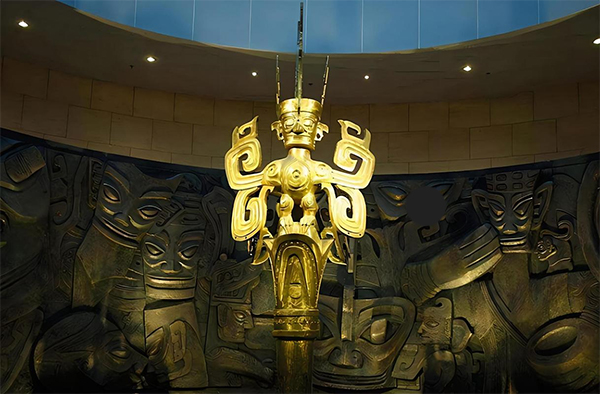
Situated in the northeast of the state-protected Sanxingdui Site, The original complex of Sanxingdui Museum was founded in August 1992 and opened in 1997. It is the representative work of the master architect Zheng Guoying. The original museum covers an area of 1,000 acres and was rated as the first batch of national first-class museums. The new complex of Sanxingdui Museum was founded in March 2022. It covers an area of 54,400 square meters, which is about 5 times the size of the old museum. It was built for new cultural relics after major archaeological excavations. It displays more than 2,000 precious cultural relics such as bronze, jade, gold, pottery, and bone, and comprehensively and systematically displays the archaeological excavations and latest research results of Sanxingdui. The main collection highlights the Ancient City of Chengdu, Shu State & its culture, while displaying thousands of valuable relics including earthenware, jade wares, bone objects, gold wares, and bronzes that have been unearthed from Shang dynasty sacrificial sites.
Sichuan Giant Panda Sanctuaries
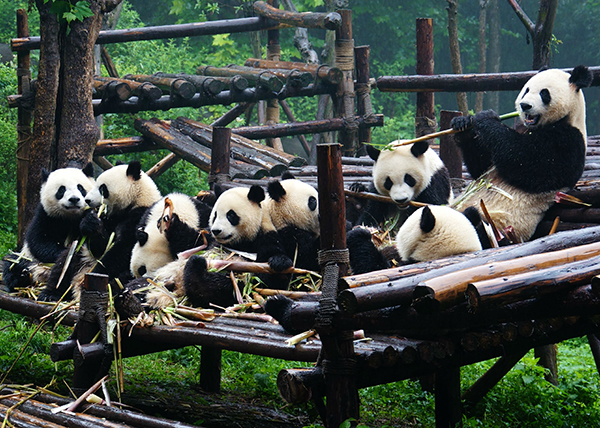
Covering a total of 9,245 km2 (3,570 sq mi) over 12 distinct counties and 4 cities, Sichuan Giant Panda Sanctuaries, lie on the transitional alp-canyon belt between the Sichuan Basin and the Qinghai-Tibetan Plateau. It is the largest remaining continuous habitat for giant pandas and home to more than 80 percent of the world's wild giant pandas. Globally speaking, it is also the most abundant temperate zone of greenery. The reserves of the habitat are 100–200 km (62–124 mi) away from Chengdu. The Sichuan Giant Panda Sanctuaries are the most well-known of their kind in the world, with Wolong Nature Reserve, generally considered as the "homeland of pandas". It is a core habitat with unique natural conditions, complicated landforms, and a temperate climate with diverse wildlife. Siguniang Mountain, sometimes called the "Oriental Alpine" is approximately 230 km (140 mi) away from downtown Chengdu, and is composed of four adjacent peaks of the Traversal Mountain Range. Among the four peaks, the fourth and highest stands 6,250 m (20,510 ft) above sea level, and is perpetually covered by snow.